16.09.2021
It never gets dark...
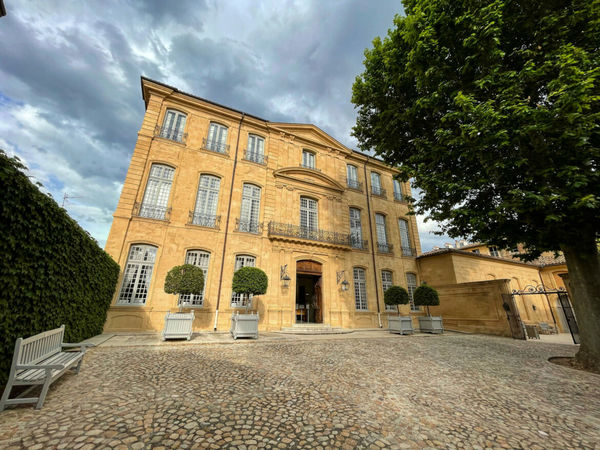
The Hôtel de Caumont is one of the most prestigious residences in Aix, in the heart of the Mazarin district.
27.11.2025
After an initial journey through iconic residences where art shaped the architecture, we continue our exploration of these exceptional homes—truly one-of-a-kind properties that have served as the birthplace of major works of art.
Some artists’ residences are more than just places to live: they are spaces that have been thoughtfully designed, reinvented, and shaped as truly custom-built properties, conceived to become an intimate extension of their creator.
For this second installment, we present five remarkable homes—as visually striking as they are inspiring—each boasting a strong architectural identity and a character that clearly sets it apart in the market for exceptional properties.
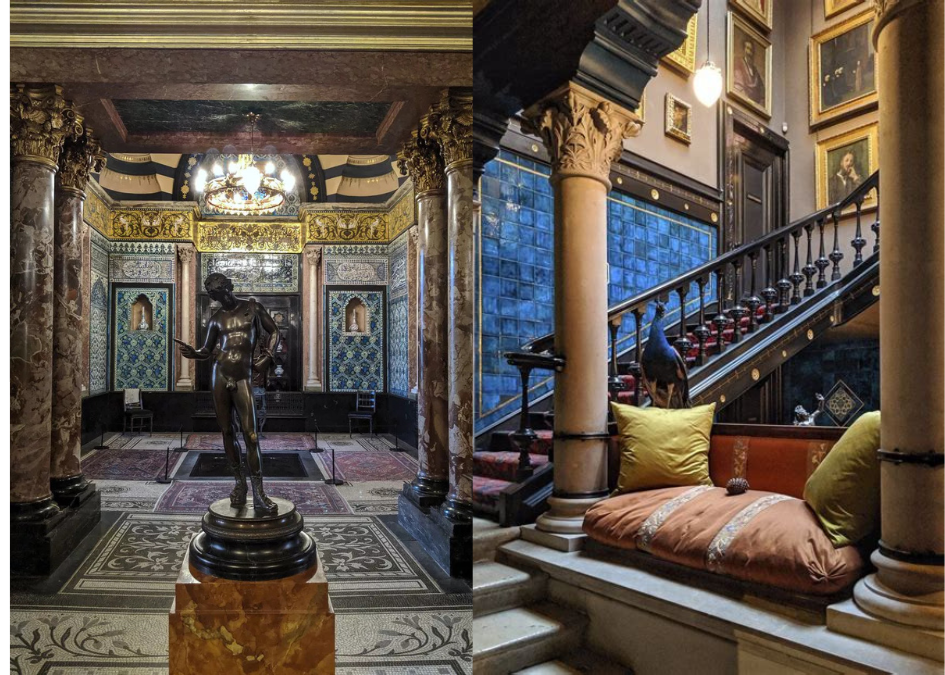
Built between 1866 and 1895, the home of Frederic Leighton—painter and president of the Royal Academy—is one of Europe’s most remarkable artistic residences. Located in the highly sought-after neighborhood of Kensington, this exceptional property quickly became a venue for receptions, creative work, and exhibitions, transforming the house into a hybrid space—at once a home, an artist’s studio, and an architectural showcase.
Leighton conceived his home as a unique residence, designed to reflect his taste for the Orient and decorative art. The Arab Hall, the property’s centerpiece, was designed to house his prized collection of Islamic tiles. Marble, mosaics, a gilded dome, generous spaces, and a central pool create an almost sacred atmosphere, typical of prestigious properties where fine materials and craftsmanship intertwine.
The other rooms, more minimalist in style, are designed as optimized workspaces, benefiting from abundant natural light, impressive ceiling heights, and spaces tailored to creative work.
• harmony between Eastern influences and Victorian architecture
• a unique interplay of light and materials
• a residence-studio conceived as a complete architectural work
• fluid circulation, carefully crafted spaces, and an immersive experience
Now a museum, Leighton House is considered a jewel of Victorian architecture. Perfectly restored, this historic property stands as a testament to an artist’s ability to transform a house into a personal and cohesive world. It now attracts art lovers, architects, and enthusiasts of exceptional properties, drawn by its rare blend of intimacy, aesthetic appeal, and architectural exoticism.
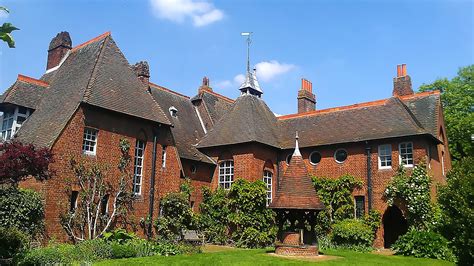
Conceived in 1859 for William Morris, an iconic figure of the Arts & Crafts movement, the Red House was designed in collaboration with architect Philip Webb. This exceptional residence marks a true turning point in the history of residential architecture, breaking with industrial models to return to an authentic home rooted in craftsmanship and attention to detail. Today, it remains one of the United Kingdom’s most iconic heritage sites.
From the outset, the property was conceived as a creative haven—a home where every element contributes to the identity of the place. Morris himself designed the decorative motifs, murals, furniture, stained-glass windows, and textiles, transforming this residence into a truly artisanal and cohesive architectural project.
Local materials, distinctive red brick, exposed timber framing, simple volumes, and thoughtful functionality: everything in the house reflects the Arts & Crafts ideal, rooted in poetic and sincere craftsmanship.
• Medieval architecture reimagined and integrated into a residential setting
• Handcrafted decor conceived as a unified work of art
• Harmony between the garden, natural materials, and interior spaces
• A commitment to creating a functional, warm, and inspiring home
Designated a historic monument, the Red House is today a major heritage site and an international symbol of the Arts & Crafts movement. It exemplifies the birth of modern residential architecture and serves as a reminder that beauty can be woven into everyday life through craftsmanship and custom design. It is a home that continues to inspire architects, designers, and lovers of unique properties.
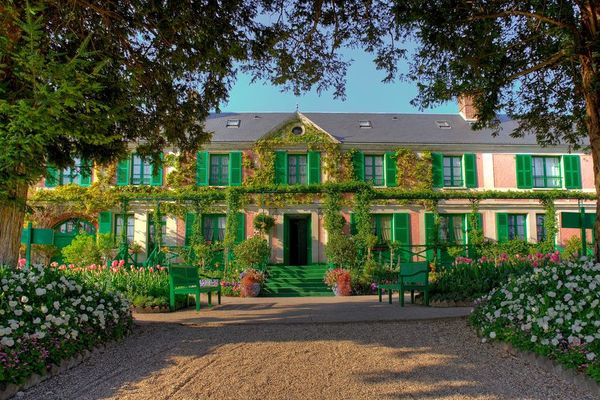
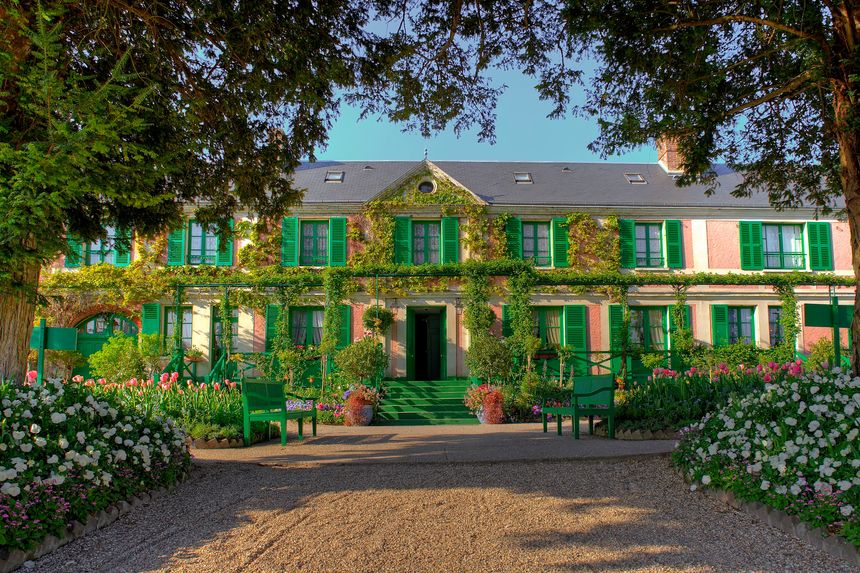
When Claude Monet discovered Giverny in 1883, he immediately saw it as the ideal place to live, create, and shape his artistic world. He transformed this Norman farmhouse and its vast grounds into a true haven of inspiration, where every color, every flower, and every outdoor view became an element of his artistic exploration. Over the decades, this residence would become one of France’s most iconic heritage sites.
Monet gradually expanded the house, reimagined the layout of the rooms, and created living spaces bathed in natural light. Everything was designed to foster creative inspiration: generous spaces, openings onto the garden, and bold color choices. But it was above all the exterior that constituted his major work: meticulously structured flowerbeds, colorful pathways, carefully studied perspectives, and floral compositions conceived as a veritable living palette.
Later, he envisioned his famous water garden, which has since become iconic: a Japanese bridge, climbing roses, lush vegetation, and a vast pond filled with water lilies. This space, a veritable moving painting, would become the direct inspiration for some of his most celebrated canvases and would give the property a truly unique character.
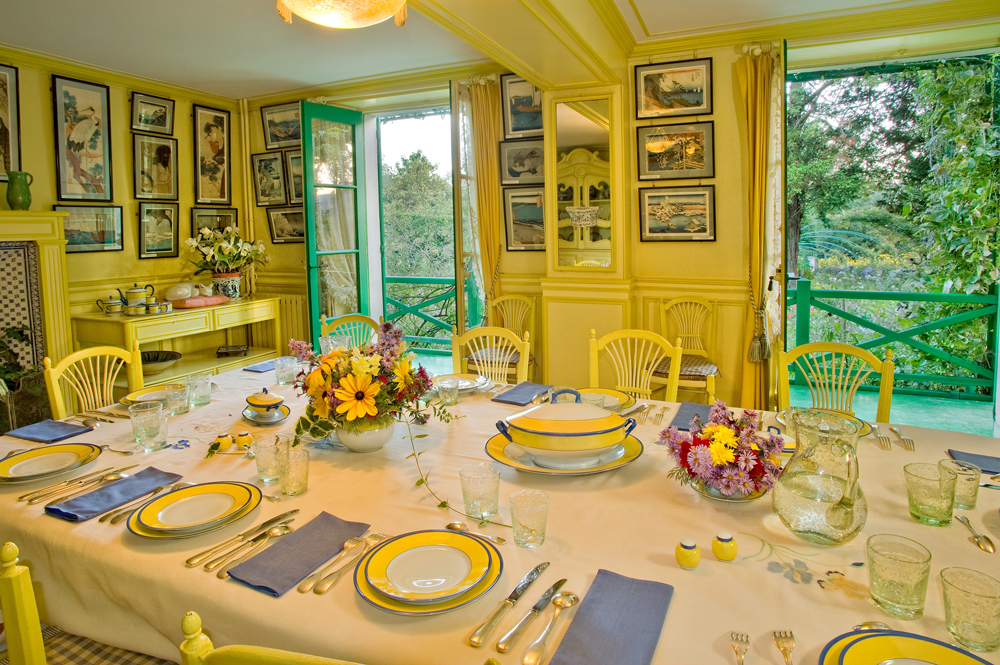
Lunch in the Sun – The Yellow Dining Room: Of all the interior rooms, the dining room remains the most spectacular and unique. From the moment you enter, it strikes you with its radiance: a vibrant, sun-drenched space, entirely designed by Monet himself. He envisioned this everyday space as a true work of art, dominated by yellow—a color he loved as much on his palette as in his garden.
The wood paneling is painted a deep, intense yellow, while the walls feature a brighter, almost lemony shade. Even the furniture—including a large traditional Norman sideboard—is rendered in these sunny tones, lending the room a harmony that is both bold and warm. This room seems bathed in light, as if the Giverny sun were constantly shining through.
On the walls, a multitude of Japanese prints—which Monet collected passionately—provide a poetic contrast and serve as a reminder of the fundamental influence of Japanese art on his work. The table, for its part, reflected family life and moments of togetherness: simple tableware for everyday use, elegant porcelain adorned with a delicate blue border for distinguished guests. Generous meals were served there, reflecting the painter’s love of good food.
Two French doors draped with white broderie anglaise curtains open onto a small terrace with green railings: a sun-drenched spot with a direct view of the garden, a true haven of serenity where Monet loved to spend time.
• bold interior colors, conceived as an artistic setting
• architectural use of natural light
• a constant connection between the house, the garden, and the creative process
• a simple, warm, and deeply intimate atmosphere
Now open to the public, Monet’s house in Giverny is one of the most visited artistic and heritage sites in France. This legendary estate illustrates how an environment, a garden, and architecture can complement, influence, and enhance an artist’s work. An inspiring residence, it has become a living symbol of Impressionism and of creativity in harmony with one’s surroundings.
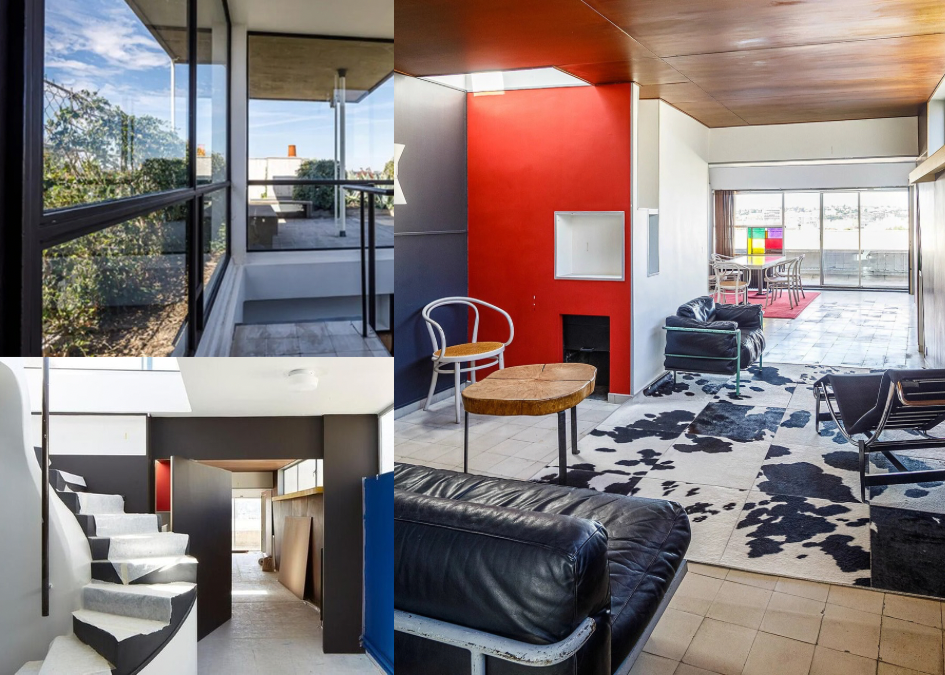
Between 1931 and 1934, Le Corbusier designed this exceptional duplex for himself, located on the top floor of a building in Paris’s highly sought-after 16th arrondissement. Conceived as an experimental real estate project, this space became at once his primary residence, his intellectual refuge, and a full-scale prototype of his architectural theories. A true signature property, designed by one of the masters of modernism.
A space shaped as a concept home: The apartment-studio perfectly illustrates his founding principles: open floor plan, fluid layout, overhead light, optimized volumes, and built-in storage. The bold colors (blue, ochre, white) and minimalist furniture reflect a pursuit of efficiency that would set a precedent.
Every square meter is designed as a functional space, making this apartment a rare example of modernist residential architecture. A true model of a home conceived as a “machine for living,” where light and movement guide the layout.
• Open spaces and carefully crafted perspectives
• Exceptional use of natural light
• Sleek, functional, and resolutely modern comfort
• Practical application of the Modulor and the principles of residential modernism
Designated a UNESCO World Heritage Site, this apartment is now one of the most valuable heritage properties associated with Le Corbusier. This iconic duplex offers a rare glimpse into the master’s vision: conceptual yet perfectly livable architecture that bears witness to the evolution of urban housing in the 20th century.
A unique place, essential for understanding how an architect can transform a residential space into an architectural manifesto.
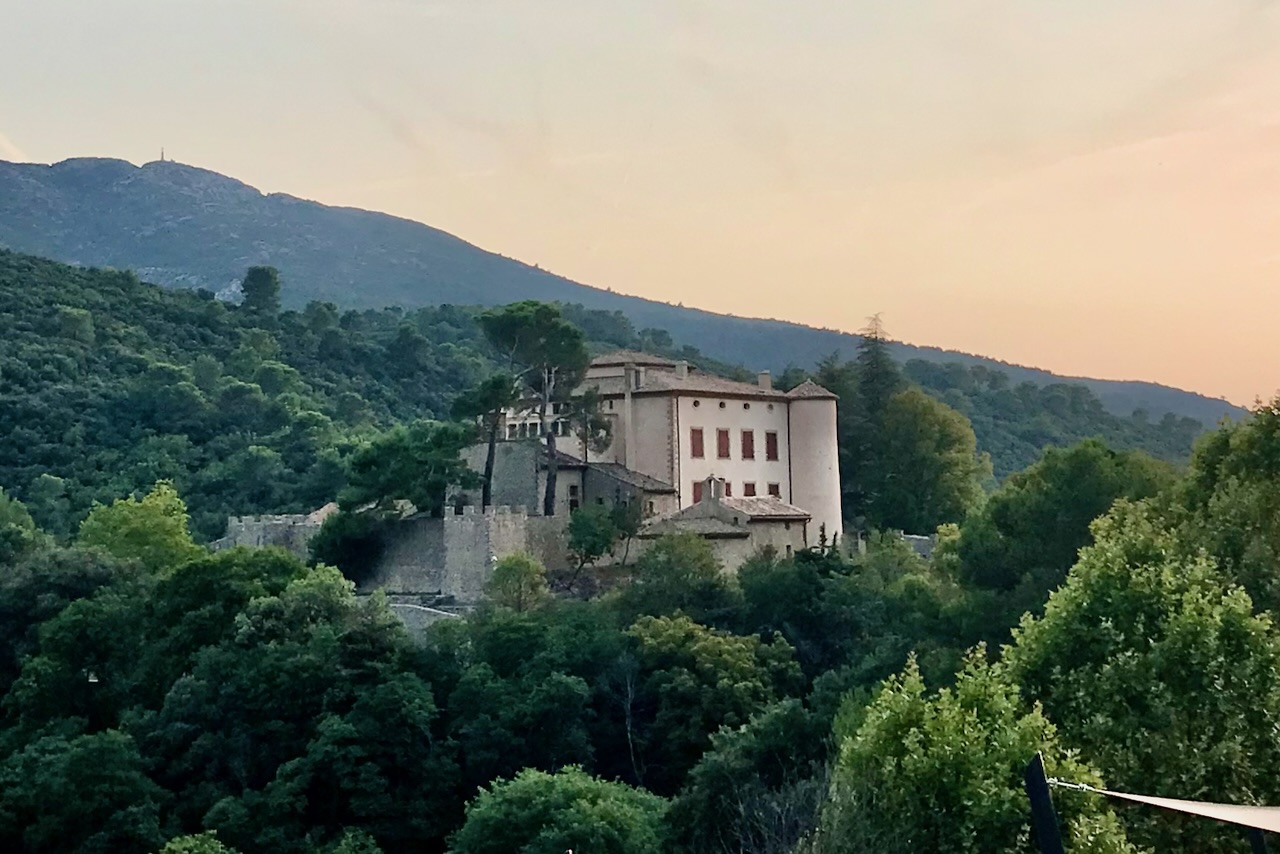
In 1958, Pablo Picasso acquired the Château de Vauvenargues, a grand historic estate situated opposite the majestic Sainte-Victoire Mountain. This rare residence, emblematic of Provençal architectural heritage, became a powerful, almost spiritual refuge for the artist, far from the hustle and bustle of the French Riviera. Located just 50 kilometers from Saint-Rémy-de-Provence—a mecca for art, architecture, and luxury real estate where STYLES is based—the château lies at the heart of a region deeply steeped in creativity.
In late summer 1958, art historian Douglas Cooper spoke to Picasso about the unique charm of this squat building, standing on a property spanning more than 800 hectares at the foot of the north face of Sainte-Victoire, itself immortalized by Paul Cézanne. Fascinated by the power of the place, Picasso declared to his dealer Daniel-Henri Kahnweiler:
“I’ve just bought Sainte-Victoire.”
Kahnweiler, thinking of a work by Cézanne, replied: “Which one?”
—“The real one!”
A reply that has become legendary, just like this extraordinary château.
Picasso reimagined the castle’s layout and spirit to suit his creative needs. He set up a monumental studio there, incorporated his sculptures, and arranged his personal collections throughout the various rooms of this exceptional residence. Some spaces even became works of art in their own right: several rooms, including the famous bathroom, were painted directly onto the walls by the artist, transforming the architecture into a living canvas—a perfect fusion of historic heritage and contemporary expression.
The contrast between the building’s thick walls—typical of Provençal fortresses—and the freedom of Picasso’s artistic world creates a striking visual dialogue. The interiors, deliberately uncluttered, leave ample room for creativity, making the château a raw, almost monastic setting entirely dedicated to art.
• Solid, authentic architecture, rooted in Provençal tradition
• A quiet, powerful atmosphere conducive to introspection and creativity
• An intimate connection to Cézanne and the iconic landscapes of the South
• Deliberate simplicity that highlights the art and the spaceHéritage :
Propriété privée et rarement accessible, le Château de Vauvenargues demeure l’un des biens patrimoniaux les plus emblématiques associés à Pablo Picasso. Il abrite sa sépulture ainsi que celle de son épouse, témoignage d’un attachement profond, presque viscéral, à ce lieu unique.
Symbole majeur de la Provence artistique, le château s’inscrit dans un paysage où se rencontrent nature, patrimoine et création, à l’image de la ville d’Aix-en-Provence, située à quelques kilomètres seulement, et des villages emblématiques alentour comme Saint-Rémy-de-Provence. Ces territoires, profondément marqués par l’histoire de l’art et l’architecture, sont aujourd’hui des références incontournables de l’immobilier haut de gamme en Provence, où demeures de caractère et biens d’exception perpétuent cet art de vivre unique.
These five exceptional residences perfectly illustrate how a home can transcend its mere function to become a truly exceptional property, where art, architecture, and everyday life come together. From Frederic Leighton’s Victorian home in London to the Red House in England, from Claude Monet’s Impressionist estate in Giverny to Le Corbusier’s modernist duplex in Paris and the Château de Vauvenargues in Provence, each property reveals the intimate and creative vision of its occupant.
Beyond the walls and spaces, what makes these homes unique is the way architecture, interior design, light, and landscape intertwine to fuel inspiration. These homes also illustrate the value of an artistic real estate heritage—rare properties that continue to inspire architects, designers, and art enthusiasts around the world.
For connoisseurs of exceptional real estate, these places demonstrate that certain residences are not merely living spaces, but true architectural masterpieces, where every detail is carefully considered to create a unique and timeless experience. In this second installment, we’ve explored iconic homes and castles that demonstrate the power of art in the home and remind us that the connection between artistic creation and real estate can give rise to extraordinary places.
Styles's journal
16.09.2021
The Hôtel de Caumont is one of the most prestigious residences in Aix, in the heart of the Mazarin district.

19.12.2022
22.02.2022
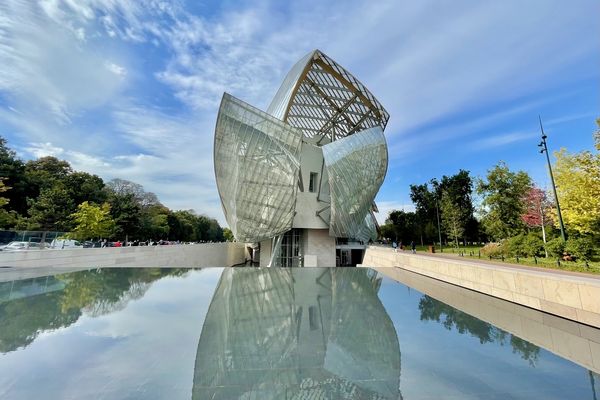
The building, designed by architect Frank Gehry, is a new venue in Paris for contemporary French and international artistic creation. A veritable cloud of glass, the Foundation is integrated into the site of the Jardin d'Acclimatation in Paris, north of the Bois de Boulogne.