
17.12.2021
Styles wishes you a wonderful holiday season
2021 Holiday Styles
20.08.2025
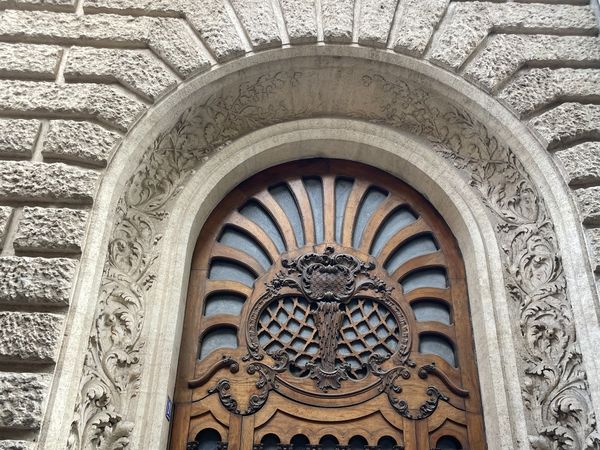
Behind Edmond Leenhardt’s refined facades and sculpted decorations lies the portrait of an architect deeply attached to his hometown, Montpellier. Discreet yet indispensable, he left his mark on the region’s urban landscape in the early 20th century. Straddling tradition and modernity, his work blends classical rigor with an eye for detail, elegance with functionality.

Born in 1870 into a family of doctors, Leenhardt initially pursued medicine before following his true calling: architecture. At just 16 years old, he was already sketching the Romanesque church of Saint-Sulpice in Switzerland—a testament to his precocious talent and his fondness for medieval lines.
In 1891, he was admitted with flying colors to the École des Beaux-Arts in Paris, where he placed third in the entrance exam. There, he learned rigor and precision and, notably, participated in the construction of the Petit Palais. This solid foundation would enable him, upon his return to Montpellier, to develop a personal style combining balanced volumes with elegant details.

In 1902, he designed the private mansion at 10 Rue Salle-l’Évêque. His signature elements were already evident there: carved doors, decorative friezes, arches, and harmonious windows. A few years earlier, the Hôtel Castelnau (1897) had already earned him recognition from his peers, even while he was still a student.
These successes enabled him to succeed architect Louis Corvetto and quickly establish himself as a leading figure in Montpellier’s architectural scene.

Over the years, prestigious commissions came one after another. In 1907, the opera singer Emma Calvé commissioned him to build her villa in Montpellier, the Villa Harmonie. A few years later, he created one of his masterpieces: the Institut Bouisson Bertrand (1912–1917). Facing Saint-Pierre Cathedral, he designed a Neo-Gothic building that blends seamlessly into its medieval surroundings. Floral wreaths, arches, and sculpted motifs attest to his attention to detail and his respect for the site.
Through these projects, Leenhardt demonstrated his ability to combine grandeur with refinement, and solidity with elegance.


Leenhardt did not work exclusively for the elite. He also played a role in the modernization of numerous villas and the construction of cooperative wineries in the 1920s and 1930s, thereby contributing to the region’s economic boom.
He also specialized in hospital architecture. The “Les Violettes” clinic and the Beausoleil mutual insurance clinic are fine examples of this. True to his spirit of continuity, he chose to incorporate into the Beausoleil project a house he had built himself a few years earlier, rather than demolishing it.
Education was also part of his scope of work. In the 1920s, he designed the expansion of the Montpellier Agricultural School. In 1933, he designed the Saint-Aunès Elementary School in an Art Deco style unique to the region. Now converted into a town hall, this building retains the mark of his boldness and attention to detail.
Leenhardt’s style is instantly recognizable:
• roofs that extend far beyond the building’s perimeter,
• the use of massive stones known as “en melons,”
• openings framed by plant-inspired sculptures,
• and ironwork crafted with meticulous attention to detail.
His architecture is a dialogue between tradition and modernity, between grandeur and intimacy.
A legacy that lives on.
Although Edmond Leenhardt did not achieve the international fame of some architects of his time, he left a lasting mark on Montpellier and its region. His villas, institutions, and public buildings reflect his commitment to balancing aesthetics with functionality.
Through his work, architecture became an art of everyday life, designed for bourgeois families as well as residents of working-class neighborhoods, students, and patients at a clinic. More than just a builder, Leenhardt was a craftsman of elegance and harmony, bequeathing to Montpellier a heritage that continues to captivate and inspire.

Styles's journal
17.12.2021
2021 Holiday Styles

09.08.2022
Trained as a painter by Simon Vouet, he would have liked to work with a brush in his hand in the confines of a studio. In the end, he worked on the reconfiguration of nature, on a considerable scale and for powerful and prestigious clients. André Le Nôtre, son of a gardener, is above all the father of monumental landscaping.

03.02.2024
francisyork presente un mas provençal de styles